Partnerships: Reflections on Molokaʻi Traditions of Hula and Makahiki
By Aiko Yamashiro, Executive Director on February 20, 2026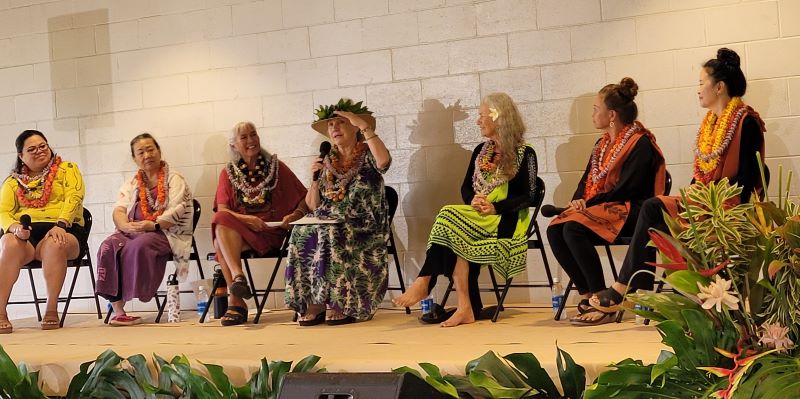
Photo Above: Hula practitioners on the panel, from left: Uakea Weisbarth-Tafaoimalo, Karen Harada, Debbie Nae‘ole, Bridget Mowat, Loretta Ritte, Teri Neuhart, Kahiwa Chow. (Photo credit: Aiko Yamashiro)
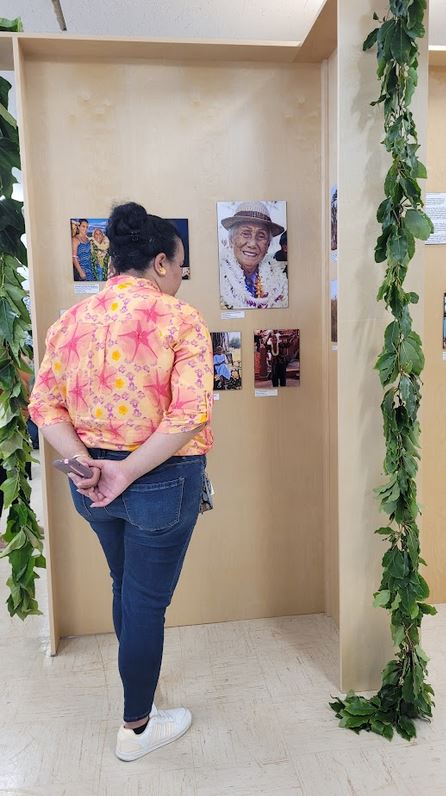
On January 24th, it was our honor to partner with Ka Ipu Makani Cultural Heritage Center and the Center for Oral History at UH Mānoa to support Nā Lālā o Molokaʻi, a public panel and an exhibit honoring the hula lineages of Molokaʻi and the role of hula in Makahiki traditions at the Mitchell Pauʻole Center. The event was part of the annual Kā Molokaʻi Makahiki Festival held on Molokaʻi from January 22 – 24, 2026, dedicated to preserving and perpetuating Hawaiian cultural traditions.
Moderated by Nāhulu Maioho, the panel featured esteemed dancers Uakea Weisbarth-Tafaoimalo, Karen Harada, Debbie Nae‘ole, Bridget Mowat, Loretta Ritte, Teri Neuhart, Kahiwa Chow, who shared stories of their kumu hula—Rachel Kamakana, Harriet Ne, John Kaʻimikaua, Kauila Reyes, and Moana Dudoit.
As young children laughed and ran around outside the hall, the panelists reminisced about similar experiences they had as keiki. Many of them were young children who were brought by their own family members into cultural events, into weekend dance practices. This space of fun was their invitation to begin their hula journey.
They laughed talking about the strictness of their kumu—lateness, protocol, commitment, discipline. Some of the panelists of an older generation remembered how hard it was to learn Hawaiian things when they were younger. Hula was one of the only ways at that time, because you did not learn about Hawaiian culture in school.
Loretta Ritte described the shift in teaching and knowledge she saw over many years of dancing—starting with hapa haole music, and only later in life learning about deeper practices and deities like Laka, thanks to Molokaʻi kumu hula like John Kaʻimikaua. Karen Harada brought a personal treasure—a weathered piece of paper with the lyrics to the song “Ka Nani Molokaʻi.” Her kumu Harriet Ne would type out songs individually for each of her students, in English and Hawaiian. This was especially precious, as it was hard to learn Hawaiian back then.
“Hula is the heartbeat of the Hawaiian people,” shared Debbie Naeʻole. There were some worries shared about the challenges of passing on traditions, how generations and what they value change. But Teri Neuhart reminded everyone, from her experience working with elementary-age youth, that “the young kids embrace it! Whatever they can hold.”
Uakea Weisbarth-Tafaoimalo shared that hula is more than dance. It is a way to strengthen the community and strengthen Molokaʻi. “Hula began on Molokaʻi, at Kaʻana. When we know and say the names of our kūpuna and places, they return to us.” Bridget Mowat put it this way:
“Hula is not just performing. Hula is learning. Genealogy. What Molokaʻi looked like before. You learn and bring it out.”
Toward the end of the panel, there were lots of thanks shared for the audience and event organizers and fellow panelists. It was a rare event to have this gathering of dancers reflect on their teachers and their community together. Kahiwa Chow expressed: “Thank you for realigning us with our kumu. Hula is a fun way to know our traditions and identity. Hula is love.”
Mahalo to the Smithsonian Center for Folklife and Cultural Heritage for supporting this event as part of their By the People: Conversations Beyond 250 series, supporting public dialogue rooted in local history, culture, and lived experience.